PESHAWAR
The Provincial AIDS Network Khyber Pakhtunkhwa urges for implementation of an inclusive, gender-affirming healthcare policy to mitigate HIV/AIDS risks among transgender communities through their equitable participation in treatment programs.
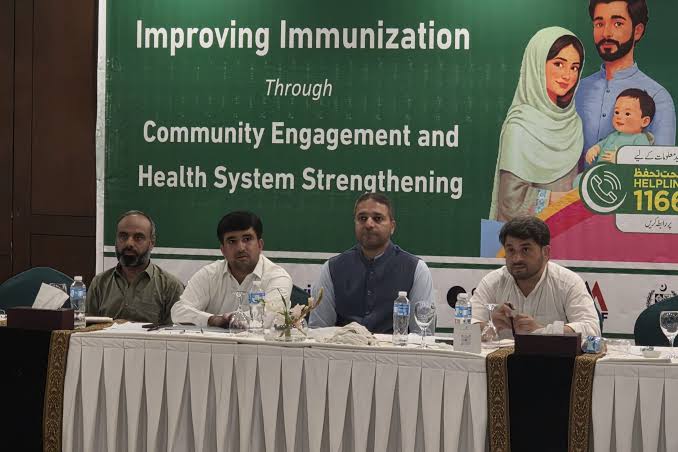
The demand was made by Provincial AIDS Network KP during a reflection meeting held here on Thursday on Need Assessment and Research on HIV and SRHR (Sexual and Reproductive Health and Rights (SRHR).
Welcoming the participants, Programme Director Da Hawa Lur, a non-governmental organization working on gender equality, said the agenda of the meeting is to bring together stakeholders and experts to share knowledge and collaborate on efforts towards inclusive healthcare policies in Khyber Pakhtunkhwa.
She also apprised meeting attendants that Da Hawa Lur recently conducted a research study to document and understand lived experiences, needs and challenges of transgender individuals at grass root level.
The study titled as `Exploring Lived Experience of Transgender individuals in KP’, focused on individuals excluded from formal outreach, especially in marginalized settings.
Sharing the outcome of the study, Ruby, a transgender working with Da Hawa Lur, informed that transgender people said mental health is very important but 86 percent did not know about any services for them.
The study, Ruby continued, found that most transgender people avoid public hospitals in KP because of fear, long wait and rude behaviour with 70 percent saying they had bad experiences, showing a clear need for respectful and friendly healthcare.
About 95% of transgender people did not know their SRHR rights and many stayed silent about sexual health out of fear and shame, showing a big need for safe and friendly education and services.
The study also suggested for inclusive public health and mental health policies, legal protection and justice mechanism besides educational and awareness efforts.
Yumna Aftab of Blue Viens also shared findings of a recently conducted research study by Blue Veins and National Commission of Human Rights (NCHR).
The study titled as ` Understanding the Impact of HIV Stigma on Transgender Persons Living with HIV in Khyber Pakhtunkhwa’ focused on Healthcare access, discrimination, HIV treatment barriers, mental health and social isolation, economic vulnerabilities, legal and policy barriers.
Yumna said despite legal protection, transgender persons continue to face systematic discrimination especially in healthcare and legal services.
The study, she continued, found that national and provincial HIV strategies often overlook the specific needs of transgender communities including stigma, gender-affirming care and access to ART (Antiretroviral therapy).
Transgender persons living with HIV/AIDS experience widespread social exclusion including rejection from families, healthcare providers at time by their own community.
Yumna informed that the study suggested for enforcement of Transgender Protection Policy at the provincial level to safeguard rights and ensure provision of services.
Mentioning importance of economic empowerment to reduce transgender vulnerability to HIV/AIDS, Saima Mehboob, a female entrepreneur and trainer, offered her services for training of transgender on different sources of livelihood at small scale.
Saima said she has trained more than 200 deserving female who have now become successful businesswomen and is also ready for providing her services free of cost to transgender community.
Dr. Muhammad Idress, Paediatric Specialist at Lady Reading Hospital said transgender are getting all facilities including HIV/AIDS treatment in the largest hospital of KP.
He urged transgender community to avail from treatment facilities at public sector hospitals and held out assurance of full cooperation and support them from him and his team members.
Nayyar Mujeeb, President of the Association of Persons Living with HIV, shared her inspiring work in supporting HIV patients by delivering medicines to their homes. Many avoid visiting treatment centers due to stigma and the psychological trauma associated with the disease, but her efforts ensure they still receive critical care with dignity and compassion.
Programme Manager Blue Veins, Qamar Naseem stressed for structural reforms with the objective for brining change in attitude of people towards transgender.
He suggested for inclusion of transgender treatment in medical curriculum and for training of paramedic staff at hospitals.
Muhammad Rizwan of NCHR disclosed that policy guidelines have been issued by Khyber Pakhtunkhwa government to all the department for dealing with transgender community.
He said in the new budget some schemes have been reserved for transgender community which will be implemented in the new fiscal year.
CEO Da Hawa Lur, Khurshid Bano supported the suggestion of economic empowerment of transgender through skill training including information technology.
She also urged both the government and the private sector to create employment opportunities for the transgender community, reducing their reliance on dance performances and sex work as means of survival.