Staff Reporter
Islamabad
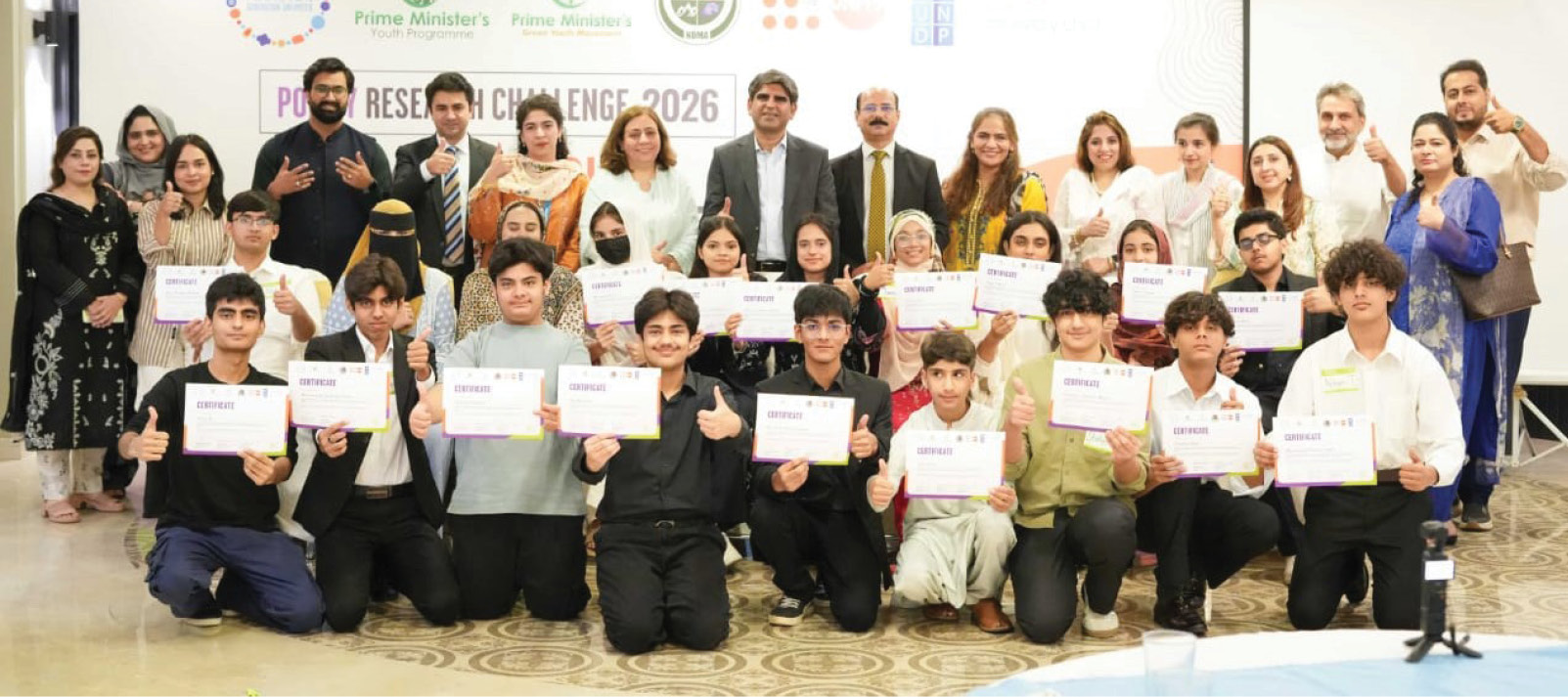
The 4-day Policy Research Challenge (PRC) 2026 bootcamps for adolescents and youth concluded successfully, bringing together aspiring young researchers from across Pakistan to strengthen evidence-informed policymaking on Disaster Risk Reduction (DRR).
Implemented under Pur Azm Pakistan – Generation Unlimited, a recently launched partnership between UNICEF Pakistan, UNDP Pakistan, UNFPA, the Prime Minister’s Youth Programme (PMYP) the initiative is implemented with the National Disaster Management Authority (NDMA) and the School of Leadership Foundation (SoLF) to build the capacity of participants through expert-led sessions, mentorship, and collaborative learning on conducting policy and action research.
The programme equipped 16 adolescent and 17 youth researchers with the knowledge, mentorship, and practical tools to develop research-driven policy solutions that address Pakistan’s disaster resilience challenges.
Dr. Muhammad Ali Malik, Joint Secretary, PMYP, addressed the participants of the two bootcamps and emphasized the role young people can play in improving public policies in the country, especially for the most marginalized.
The programme reflects government’s commitment to empowering young people and encouraged participants to engage with national youth initiatives to help shape Pakistan’s development agenda.
Throughout the bootcamp, participants strengthened their understanding of disaster risk reduction through sessions on Pakistan’s DRR framework, anticipatory action, resilient communities and infrastructure, evidence-based policymaking, policy research methods, and disaster preparedness.
Participants also received mentorship on developing research questions, collecting and analysing evidence, understanding the policy cycle, and effectively pitching policy recommendations, equipping them to design practical, research-driven solutions to disaster risk challenges in Pakistan.
Zahra Jabeen, Programme Analyst – Adolescents & Youth, UNFPA Pakistan, said meaningful youth engagement is essential to developing inclusive policies that respond to the needs and aspirations of future generations.
Waseem Ahmad, Manager Training, NDMA, emphasized that strengthening disaster resilience requires anticipatory action, evidence-based planning, and active youth participation in advancing Pakistan’s disaster risk reduction efforts.
The programme concluded with participants presenting their research proposals to an expert evaluation panel. Following a competitive assessment, 05 projects from the Adolescent category and 10 from the Youth Bootcamp were selected to receive grants and mentorship to further develop evidence-informed policy solutions for disaster risk reduction in Pakistan.
The Policy Research Challenge 2026 reflects the shared commitment of Pur Azm Pakistan partners to empowering young people across the country with the research, leadership, and advocacy skills they need to contribute to national development and resilience.